Specimen / BPC-157
 COA Verified
Catalog / Healing & Recovery
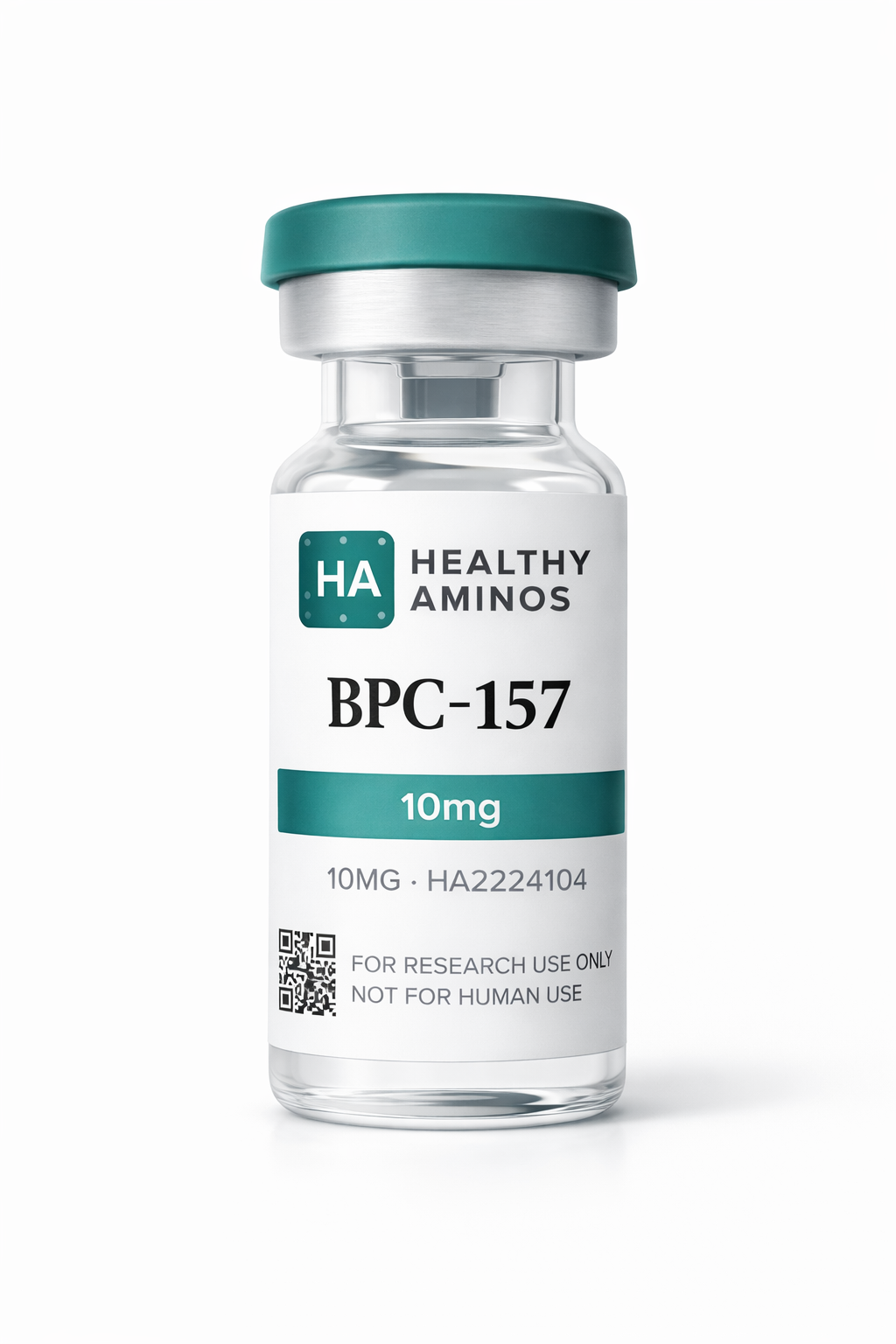
BPC-157 Peptide
Synthetic pentadecapeptide derived from gastric juice protein, studied for tissue repair and gastrointestinal mechanisms in over 100 published papers.
- Third-party COA, every batch
- HPLC + mass-spec tested
- Ships within 24h, tracked
Batch Information
Save an extra 12% paying with Bitcoin at checkout
BPC-157
$47.99
BPC-157
10mg·≥99%Research Use Only
FOR RESEARCH USE ONLY. Products sold by Healthy Aminos are intended strictly for in-vitro research and laboratory use. Not for human or animal consumption. Not FDA approved. By purchasing from Healthy Aminos, the buyer acknowledges that these products are not intended to diagnose, treat, cure, or prevent any disease. All products are sold as reference standards and research chemicals only.
Certificate of Analysis
Batch HA-BPC157-2026A
Lab-Verified Purity
Verified
Independent Third-Party Laboratory
Jun 7, 2025 · HA202605-BPC-157
Independent Third-Party Laboratory
Jun 7, 2025 · HA202605-BPC-157
Select any document to open the full certificate in a new tab.
Data / Specifications
Compound Specifications
Amino Acid Sequence
Gly-Glu-Pro-Pro-Pro-Gly-Lys-Pro-Ala-Asp-Asp-Ala-Gly-Leu-Val
Synonyms
Body Protection Compound-157, Bepecin, PL 14736, PL-10
Research Applications
Context / Research
Interacts with multiple signaling pathways including the NO system, FAK-paxillin pathway, VEGF expression, and growth hormone receptor expression. Studied primarily in gastrointestinal and musculoskeletal tissue models.
View published researchLiterature / Peer-Reviewed
BPC-157 Published Research
BPC-157 (Body Protection Compound-157) is a synthetic pentadecapeptide derived from a segment of human gastric juice protein. First characterized in the early 1990s, it has been extensively studied in laboratory and animal models across more than 100 published papers.
Tissue Repair and Wound Healing
Multiple in vivo studies have investigated the effects of BPC-157 on tissue repair processes. Research in rat models demonstrated accelerated healing of various tissue types including tendon, muscle, and skin in controlled laboratory settings. Studies have examined its interaction with growth factor pathways, particularly the FAK-paxillin signaling cascade, which plays a role in cell migration and tissue remodeling.
References
Gastrointestinal Research
As a peptide originally isolated from human gastric juice, BPC-157 has been studied extensively in gastrointestinal models. Published research has examined its effects on mucosal integrity, gastric lesion models, and intestinal anastomosis healing in animal studies. Several research groups have investigated its interaction with the NO system and prostaglandin pathways in digestive tissue models.
References
Musculoskeletal Research
Studies in animal models have investigated BPC-157 in the context of tendon, ligament, and muscle injury models. Research published in the Journal of Orthopaedic Research examined tendon-to-bone healing in rat Achilles tendon models. Additional studies investigated its effects on bone fracture healing and muscle crush injury models, with researchers examining markers of tissue regeneration and vascularization.
References
Vascular Research
Published studies have examined BPC-157 in vascular models, including research on angiogenesis and vessel formation. In vitro and in vivo studies investigated its effects on endothelial cell tube formation, VEGF expression, and collateral vessel development in ischemia models. Researchers have characterized its interaction with the NO system in vascular tissue.
References
The studies referenced above are presented for informational purposes only and do not constitute medical claims. All Healthy Aminos products are sold for research use only and are not intended for human consumption.
Index / FAQ
Frequently Asked Questions About BPC-157
What is BPC-157 peptide?
What purity is Healthy Aminos BPC-157?
How should I store BPC-157?
Does Healthy Aminos BPC-157 come with a COA?
What is the molecular weight of BPC-157?
Is BPC-157 legal to purchase?
Keep Exploring / Catalog
Related Healing & Recovery Peptides
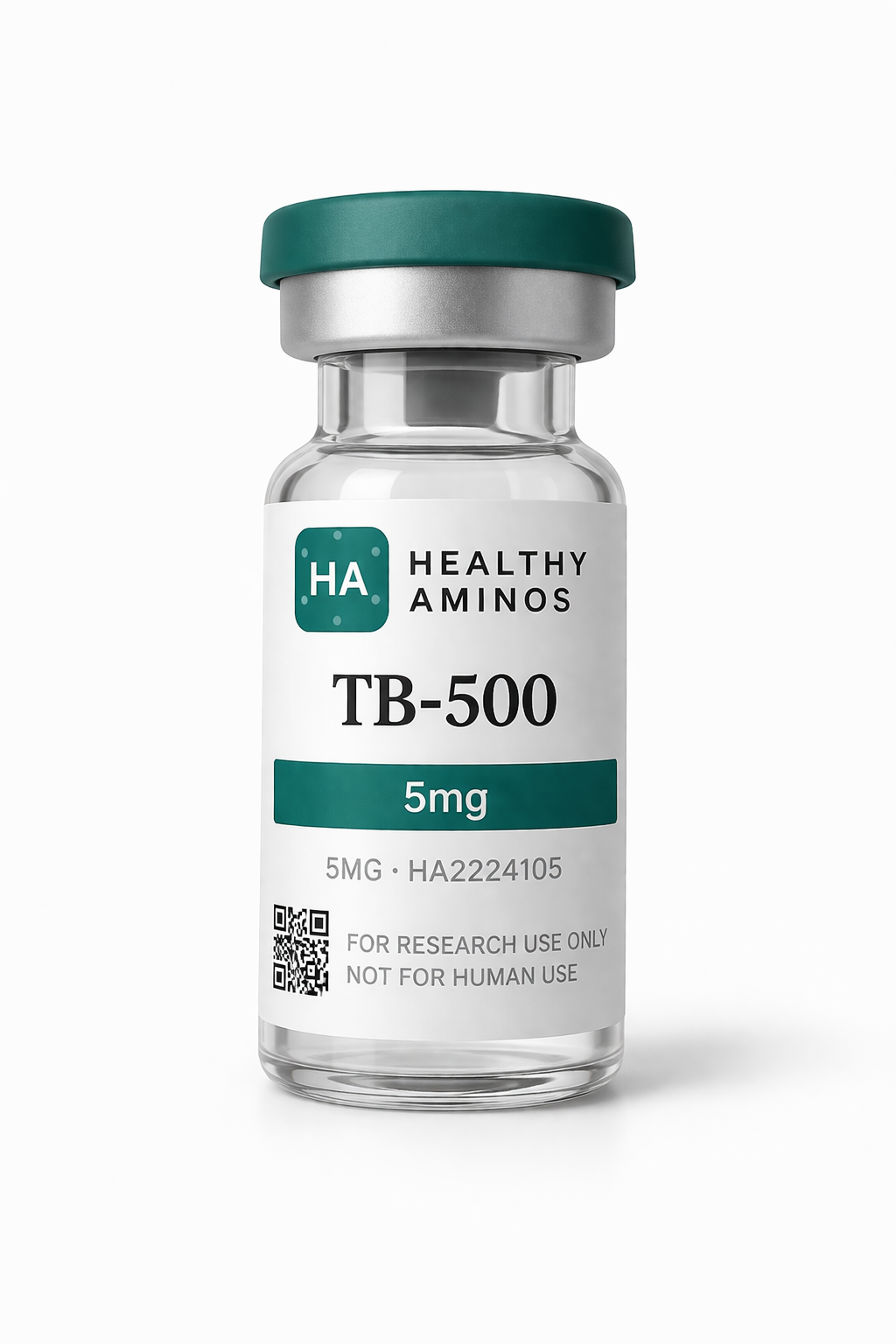
TB-500
10mg · Lyophilized powder
Synthetic fragment of the Thymosin Beta-4 protein, studied in cellular migration and actin-binding research.
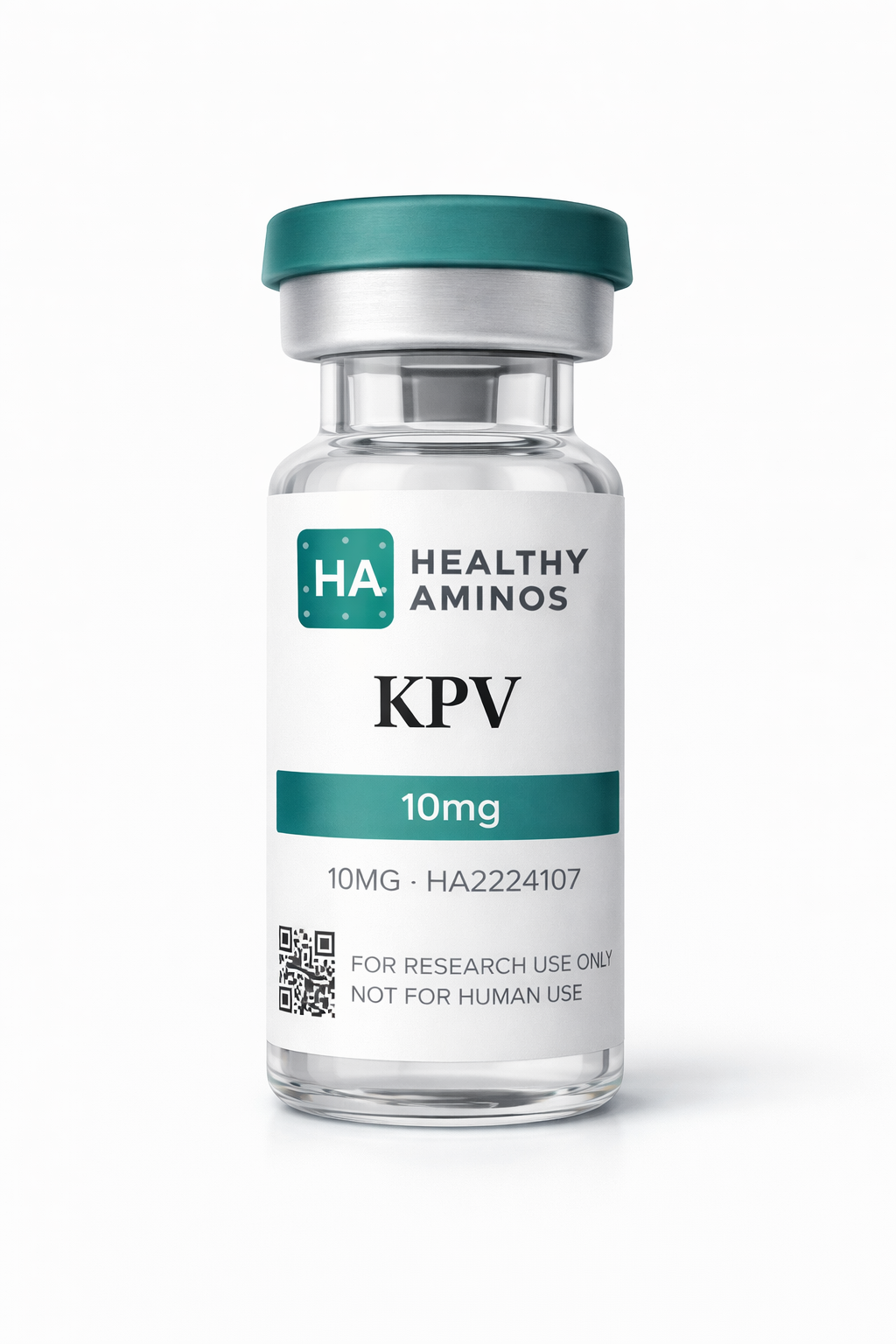
KPV
10mg · Lyophilized powder
C-terminal tripeptide fragment of α-MSH, studied in inflammatory pathway and barrier function research.
Research Use Only
FOR RESEARCH USE ONLY. Products sold by Healthy Aminos are intended strictly for in-vitro research and laboratory use. Not for human or animal consumption. Not FDA approved. By purchasing from Healthy Aminos, the buyer acknowledges that these products are not intended to diagnose, treat, cure, or prevent any disease. All products are sold as reference standards and research chemicals only.